

Practical Guide to Remembrance Day Codebreaking Pack KS2
The Remembrance Day Codebreaking Pack KS2 offers a unique way to teach cipher lessons in a meaningful context. This article provides a practical guide to help teachers effectively use the pack in their classroom, including how to structure the lesson, manage materials, and engage students.
Getting Started with the Remembrance Day Codebreaking Pack
Step 1: Familiarize Yourself with the Content
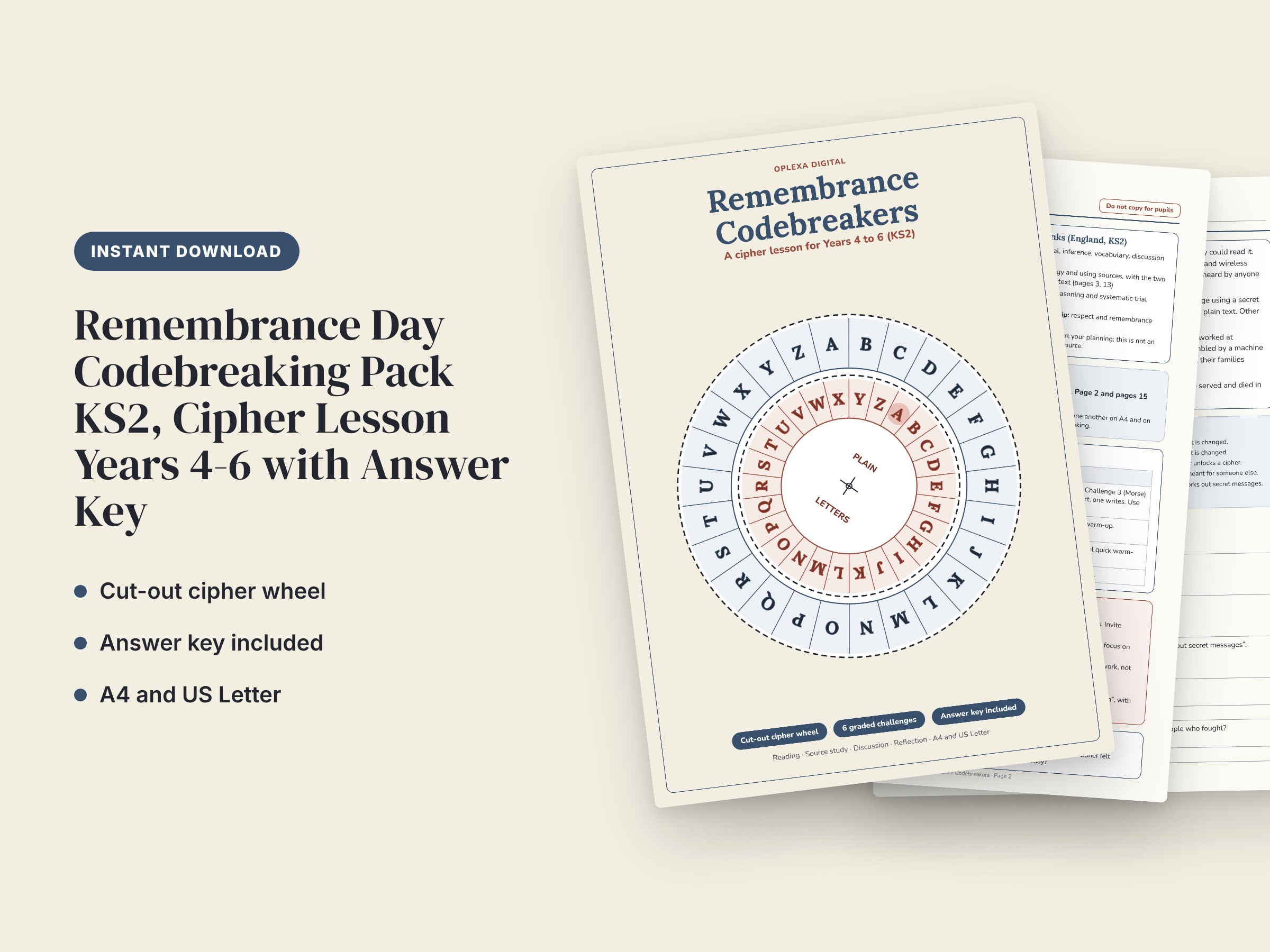
Before diving into the lesson, spend some time reviewing the contents of the Remembrance Day Codebreaking Pack. It includes 16 printable pages, a cut-out cipher wheel, six graded challenges, a source study, discussion cards, and an answer key.
Step 2: Understand the Context
Remembrance Day is an important historical event, and understanding its significance can help students appreciate the lessons. Introduce Remembrance Day in a historical context, discussing the reasons for remembering the war and the impact of the day.
Structuring the Lesson
Step 3: Begin with the Cipher Wheel
Start by introducing the cipher wheel, a tool used by soldiers to encrypt messages during World War I. Have students cut out the cipher wheel and use it to decode messages. Explain the basic mechanics of how the wheel works and what each letter and number represents.
Step 4: Present the Source Study
Provide students with a source study, such as a letter from a soldier or a postcard, that they will use to decipher messages. Ensure the source study is relevant to the topic and includes information that aligns with the cipher lessons. For example, a letter from a soldier could include details about his daily life or his experiences during the war.
Engaging Students with the Challenges
Step 5: Introduce the Challenges
The Remembrance Day Codebreaking Pack includes six graded challenges. These should be presented in a gradual manner, starting with easier challenges and moving to more difficult ones as the class progresses. This helps maintain student engagement and builds confidence.
Step 6: Facilitate Discussion
Encourage students to discuss their findings and the challenges they face. Use discussion cards to prompt these conversations. For example, a card might ask, "What challenges did you face while decoding the messages?" or "How do you think the soldiers felt while writing these messages?"
Using the Answer Key
Step 7: Utilize the Answer Key
The pack includes an answer key for the challenges. Use this to help guide students through the process of decoding messages, especially when they are stuck. The answer key can also be used as a reference for students who need extra support.
Conclusion
By following this practical guide, you can effectively use the Remembrance Day Codebreaking Pack in your classroom. The pack provides a unique way to teach cipher lessons while connecting them to a significant historical event. Engage your students with the content, support them with the challenges, and utilize the answer key to ensure everyone is on track.
Save time: Remembrance Day Codebreaking Pack KS2, Cipher Lesson Years 4-6 with Answer Key is ready to download and use today.
Stay in the loop.
New templates and member-only offers, now and then. No spam. Unsubscribe in one click.