

How to Host a Halloween Escape Room Party Kids Actually Love
How to Host a Halloween Escape Room Party Kids Actually Love
Escape room parties have become a go-to choice for parents and party planners—and for good reason. They keep kids engaged for hours, encourage teamwork, and create memorable moments. If you're planning a Halloween escape room party for younger children, here's how to make it run smoothly and stay fun throughout.
Why Escape Rooms Work for Kids' Parties
Unlike traditional party games, escape rooms give every child a role. Shy kids can solve puzzles quietly while outgoing ones lead the group. There's no single "winner" eliminated early on, so everyone stays invested until the end. The challenge feels real enough to be exciting, but age-appropriate puzzles keep frustration low. Plus, the Halloween theme adds atmosphere without requiring costumes or complex props.
Prepare Your Space and Time
Before the party, walk through your space and imagine how kids will move through it. You need:
- A designated "puzzle area" where clues and props stay visible
- Clear pathways so kids don't trip or collide
- A quiet corner for hints or restarts if someone gets stuck
- A timer visible to everyone (a simple kitchen timer works fine)
- All materials printed and checked beforehand—nothing worse than missing pages mid-game
Test the puzzles yourself first. This sounds obvious, but solving them gives you confidence to answer "Is this right?" quickly and keeps the game flowing.
Brief Them Clearly
Gather everyone before you start. Explain the story in one or two sentences: "You're trapped in a haunted mansion and must solve puzzles to escape before midnight." Show them what a solved puzzle looks like so they understand success. Tell them they can ask for hints if they're stuck, but guessing won't work—they have to solve it. Keep your explanation under two minutes or energy drops.
Manage the Group Dynamics
With multiple kids, one or two often take over. Gently spread responsibility: "Alex, can you work on that puzzle? Jordan, these clues are for you." If a puzzle stumps everyone, don't let them spin their wheels for more than four or five minutes. A well-timed hint keeps momentum alive. You're not making it easier; you're just keeping it moving.
Pacing and Hints Are Everything
The difference between a party that drags and one kids talk about for weeks is pacing. Puzzles should take 2–5 minutes each. If one takes longer, that's where hints help. Having hint cards ready (ideally increasing in helpfulness) means you're not inventing help on the spot. A hint system also teaches kids to ask questions and think strategically instead of giving up.
Keep Energy High in the Final Stretch
Halfway through, energy often dips. Combat this by offering a simple "breather" puzzle or building excitement as they get closer to the end. If they've solved most puzzles, lean into celebration: "You're almost there! One more puzzle between you and freedom!" The final puzzle should feel like a payoff, not an afterthought.
Celebrate the Win
Whether they escape or not, mark the moment. Certificates, stickers, or even printed "escape confirmation" badges make it feel official. Kids remember the celebration as much as the puzzles.
Choosing the Right Game Kit
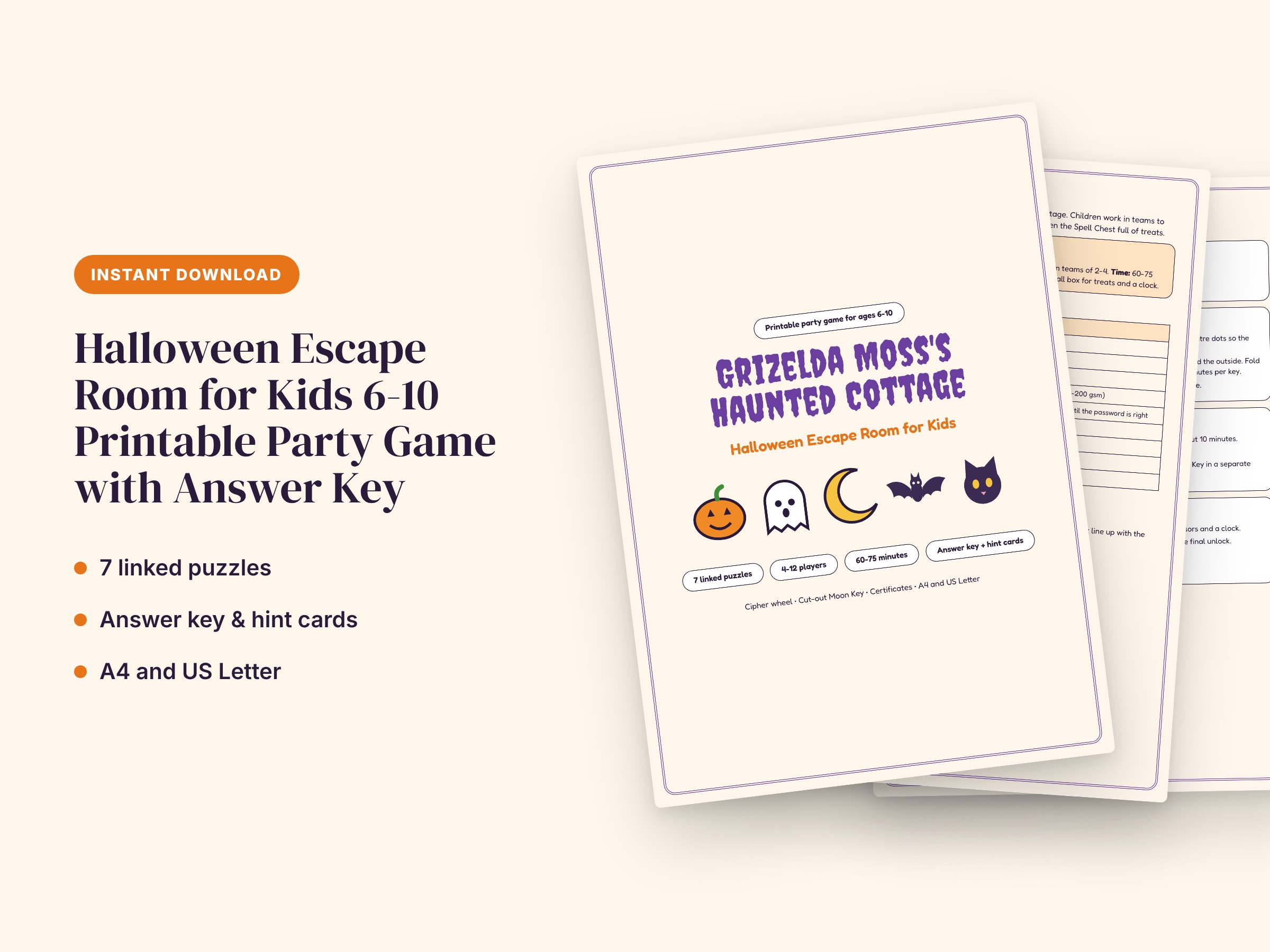
A quality escape room kit saves enormous time. Look for one with linked puzzles (so solving one unlocks the next), clear answer keys, and hint cards built in. The kit should include all you need to print and run—no hunting for extra materials. A Halloween escape room designed for this age group with seven connected puzzles, a cipher wheel, and pre-made certificates handles most of the planning work for you.
Common Mistakes to Avoid
- Too many kids in one group: Groups larger than 6 or 7 slow down puzzle-solving. Split them if possible.
- No timer visible: Kids work harder when they see time passing. It builds urgency.
- Hovering too much: Let them struggle briefly. Jumping in instantly makes them dependent on you.
- Skipping explanations: Five minutes of clear setup saves 20 minutes of confused questions.
After the Party
Ask kids what puzzle was hardest or their favorite moment. These details help you run your next escape room party even better. You'll learn what pacing worked, which hints were most helpful, and whether your space layout was logical.
Hosting an escape room party sounds complex but becomes straightforward with clear setup and good materials. The payoff—watching kids collaborate, celebrate, and leave excited—is worth the preparation.
Ready to host your first Halloween escape room party? Download a complete printable escape room kit with everything you need to run a smooth, fun game for kids aged 6–10.
Save time: Halloween Escape Room for Kids 6-10 Printable Party Game with Answer Key is ready to download and use today.
Stay in the loop.
New templates and member-only offers, now and then. No spam. Unsubscribe in one click.